REMI VAN ANDEL
Third Party Logistics In Supply Chain Management Is Exploding And You Should Know
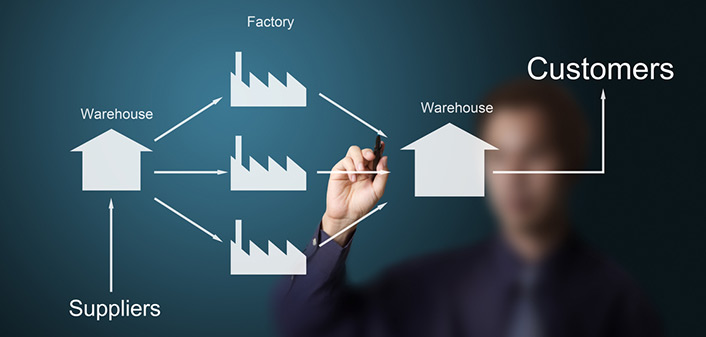
Third Party Logistics (3PL or TPL in short) is becoming increasingly important in Supply Chain Management and Logistics. In this article, I will explain why that is, so that you can integrate it in your own e-commerce. As well, I will explain how the market is closing.
What is 3PL?
Very
concisely, 3PL is the outsourcing of most to all of a company’s distribution
and fulfillment to a third party. Usually, the third party receives all the
products from the previous level in the supply chain and it will hold the product
until it is sold and shipped to the customer. Some of the companies even
process returns. This company is legally responsible for fulfilling the
activities requires by the e-commerce company. 3PL is common in both B2B and B2C
market.
In 2008,
the term 3PL was legislated as:
“A person who solely receives, holds, or otherwise transports a consumer
product in the ordinary course of business but who does not take title to the
product.”
For starting e-commerce companies all the way up to big retail firms,
it can be a pain in the ass to arrange a smooth fulfillment service that is
always on time and makes little to no mistakes. Especially when you’re a
start-up and you have other activities besides running your firm, this might be
a great solution. Involving a 3PL into your business saves you a lot of time
and trouble. As well, partnering with a big 3PL name in the market can boost
you’re business as it shows trustworthiness. More about brand recognition later
on.
The evolve of 3PL
In the past 10 years, with the boom of the internet
and e-commerce, more and more retail shifted from offline to online markets and
as a result the 3PL market exploded. It is estimated that over 96% of the
Fortune 100 is using a third party logistics partner for their business, and
approximately 86% of the Fortune 500 does.
As the market exploded in the last decade, thousands of companies rose
from the ground and became big. Especially in the last 24 months, the market
has seen extraordinary growth. In combination with macroeconomic trends, the
increasing complexity of supply chains led to huge demand growths for 3PLs. In
2017, the market grew by 10,5% to $184,3 billion US. Researchers expect to outgrow
the $200 billion US revenue target by next year.
The market of 3PLs is closing at the top
As the market grew so fast, the competitive environment was
characterized by mergers and acquisitions in the last couple of years. For
example, today’s number 2 most recognized brand in the 3PL world XPO was
actually not even in the top 20 companies a few years ago. Due to a merger with
Menlo (nr 7 at the time) the company got a huge brand boost. Today, the top 3 most
recognized companies in the market are DHL Supply Chain & Global
Forwarding, XPO Logistics and C.H. Robinson. The last named company has
steadily grown to the position they’re in now.
In this world, brand recognition
is everything. Because managers are overloaded with existing companies,
new-born merger companies and start-ups, they have no idea which company to
choose and therefore they go for the company they can recall in their mind. The
3PLs have noticed this fact and are therefore trying to acquire as many
companies as they can so they can grow further. This is the reason why the
market is closing at the top, since there are only a few really big 3PLs and
they are buying everything they can to stay there, making the entry for new
companies harder and harder.
If you want to stay up-to-date on 3PL and the changing environment of SCM and Logistics, make sure you check my blog frequently!